(203) 442-6086 [email protected]

Rapid Prototyping

Our experienced team has the capability to provide rapid prototyping using an array of advanced fabrication processes, depending on the particular objectives and applications of the project. We also do short run manufacturing in standard and engineering grade materials.
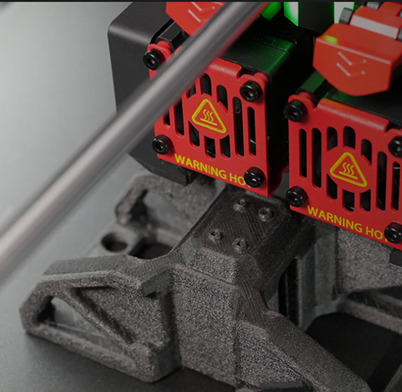
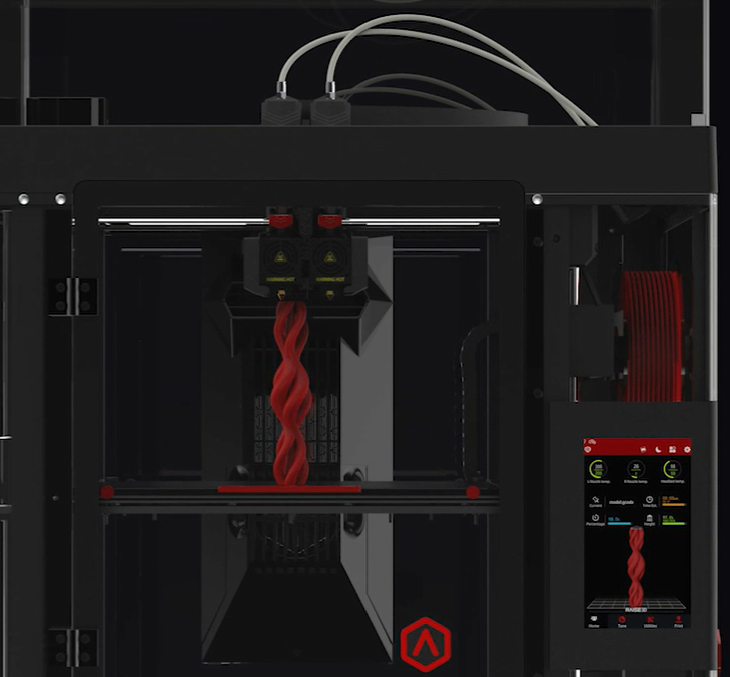
Below you may find a cursory overview of some of the processes and materials used during rapid prototyping:

Stereo Lithography (SLA)


The stereolithography printing process utilizes a photopolymer liquid resin that is cured by ultraviolet light. This process works well for objects that call for precise, miniscule details and high resolution styling or surface finish.

Pros:

  • Tight tolerances and high detail precision (IE Jewelery)

  • Minimal post processing

  • Fast print speed

  • Inexpensive printing costs

  • Complex shapes and high variety

  • Can be used as a substitute for injection molding

Cons:

  • Limited material selection

  • The least part strength offered

  • Printing size capabilities are typically smaller

  • Manual cleaning and curing of parts after printing

  • Requires supports that leave small dimples

Selective Laser Sintering(SLS)

Selective Laser Sintering (SLS) is a powder-based 3D printing process that utilizes a laser to fuse material layers into a final part. This process is used for 3D-printed metals.

Pros:

  • Very high detail
    Extreme part strength (IE automotive, aerospace)

  • Requires no supports

  • Production quality

  • Heat resistance

Cons:

  • Requires post-processing

  • Slowest print time

  • Small build chamber

  • Material cost

Fused Deposition Modeling (FDM)

Fused Deposition Modeling (FDM) machines precisely heat and extrude thermoplastic material through a very fine nozzle to create a part. FDM parts can be produced quickly allowing designers to move through the product development cycle faster to iterate and present new design features

Pros:

  • Medium-to-Fast Print Speed

  • Cost-Effective

  • On-Demand Preparation

  • Easily modified and customized components

  • Large selection of materials ranging from general-purpose PLA to engineering grade ABS or ASA to high-performing polycarbonate and carbon fiber and glass fiber impregnated material.

Cons:

  • Requires post-processing

Plastics or polymers are one of the most commonly utilized materials during the early prototyping stages due to its speed, relatively low cost and it’s lightweight quality.

Some of the most popular thermoplastics include:

Acrylonitrile Butadiene Styrene (ABS/ASA):

The most popular material in production applications of 3D printing, ABS is strong, durable and inexpensive. It is an ideal material for casings, jigs, fixtures and other end-use parts.

Polyamide (PA):

Also known as nylon, PA is stronger than ABS, albeit more expensive. It has a robust combination of physical properties, including significant ductility, making it a popular choice for functional prototypes.

Polycarbonate (PC):

In addition to being light and dense with exceptional tensile strength, PC is highly impact resistant. When reinforced with fibers, it can be used to print parts with exceptional stiffness and strength.

Poly Lactic Acid (PLA):

A thermoplastic polymer most often used in rapid prototyping design iterations due to its low cost and print speed.

While metal is difficult to use in conventional manufacturing methods, with 3D printing, manufacturers can more easily make parts from the same material that they would normally machine. It is worth noting that 3D printing manufacturers working with metals are able to create objects that conventional methods are impossible to produce. The 3D printed metal parts are noticeably stronger than their original, traditionally produced components.

As a general rule, any metal that welds or casts well will work with additive manufacturing:

Stainless Steel

A very strong, corrosion resistant, durable and relatively affordable option, engineers and scientists are using steel in high-pressure, high temperature environments, where weight is not a primary concern.

Titanium

Strong, light-weight and biocompatible, titanium is especially popular for 3D printing in medical applications as well as aerospace.

Aluminum

Weaker than steel or titanium, aluminum is more resistant to corrosion, lightweight and versatile, working perfectly for automotive and maritime applications. It also provides the opportunity to create thin parts with fine details.

Bronze, Gold, Silver and Copper are all available options and often selected in aesthetic projects.

Ceramics

Ceramics have superior mechanical properties under compression and at higher temperatures than metals and plastics. They possess electrical and thermal conductivities that can be utilized across various industries. With their heat-resistance abilities, ceramics can withstand extremely high levels of heat without breaking or warping. These qualities make it an ideal material for high-temperature applications in the automotive and aerospace industries.

Composites

Composites are two materials that have been melded into one with properties neither raw material possesses on its own. They are recommended materials for tooling and functional parts due to weight optimization as well as significant strength and durability, composites are often chosen for very large or geometrically complex parts for lightweight aircraft and cars.

Some currently popular composite material fillers for thermoplastics include carbon and glass fiber, but the variety of composites is constantly expanding and becoming more complex. Depending on the filler used in thermoplastic composites, the composite may be thermally conductive or insulative, electrically conductive or insulative, lightweight or heavy, stiff or soft. Composite materials can address many engineering challenges.

Custom Engineered Materials

Ceramics have superior mechanical properties under compression and at higher temperatures than metals and plastics. They possess electrical and thermal conductivities that can be utilized across various industries. With their heat-resistance abilities, ceramics can withstand extremely high levels of heat without breaking or warping. These qualities make it an ideal material for high-temperature applications in the automotive and aerospace industries.